Niacinamide Face Cream: How to Control Sebum and Visibly Reduce Pores

Contents
If you're looking for a niacinamide face cream that truly delivers on its promises—reducing sebum, tightening pores, and evening out skin tone without drying—you first need to understand how this molecule works and why the concentration and pH of the formulation make all the difference. On the market, you'll find both niacinamide creams and serums: PURIFY HBSKN – Hebi Skin is an exfoliating night serum, a more concentrated and faster-penetrating formula compared to a traditional cream.
Niacinamide (Vitamin B3) is now one of the most well-documented active ingredients in cosmetic dermatology. It acts directly on sebum production at the hair follicle level, reduces pore visibility, and regulates the skin's inflammatory response—all without altering the skin's pH or damaging the lipid barrier.
In this article, we'll look at the mechanism of action, why the optimal concentration is 3-5% (not the 10 or 20% often found on the market), and how PURIFY HBSKN – Hebi Skin combines niacinamide, glycolic acid, and controlled pH in a formulation specifically calibrated for male skin. For the scientific basis of all HBSKN – Hebi Skin ingredients, please refer to the ingredients and research page.
Sebum and Male Skin: Why the Problem is Structural
Male skin produces an average of 20-25% more sebum than female skin, due to higher levels of dihydrotestosterone (DHT)—the active metabolite of testosterone that directly stimulates the sebaceous glands.
This has two practical consequences: pores appear more dilated (because the sebaceous glands are structurally larger) and the skin tends to look shiny, especially in the T-zone, throughout the day. In the presence of PM10 and skin bacteria—Cutibacterium acnes, which normally inhabit the follicle—excess sebum becomes a substrate for oxidation and comedone formation.
The fundamental problem is that most "anti-sebum" products on the market operate with a flawed approach: by removing excess sebum through harsh surfactants or alcoholic astringents, they cause skin dehydration which—through a compensatory mechanism—further stimulates sebaceous production. It's a vicious cycle.
Niacinamide breaks this cycle by acting at the source: on production, not removal.
What is Niacinamide and How Does it Work on the Skin?
Niacinamide is the amide form of Vitamin B3 (nicotinic acid). At the cellular level, it is a precursor to NAD+ and NADP+—fundamental coenzymes for hundreds of oxidation-reduction reactions in cellular metabolism.
In cosmetics, its clinically documented effects are four:
Sebum Regulation
Niacinamide reduces sebum production by inhibiting the transfer of lipids from sebaceous keratinocytes to the follicle surface. The precise mechanism is mediated by the inhibition of lipolysis in the sebaceous glands, reducing the synthesis of triglycerides which make up 57% of human sebum.
A study published in the Journal of Cosmetic and Laser Therapy documented a measurable reduction in sebaceous production (-52% sebum in the T-zone at 4 weeks) with a 2% niacinamide topical formulation, confirming efficacy even at moderate concentrations.
Reduction of Pore Visibility
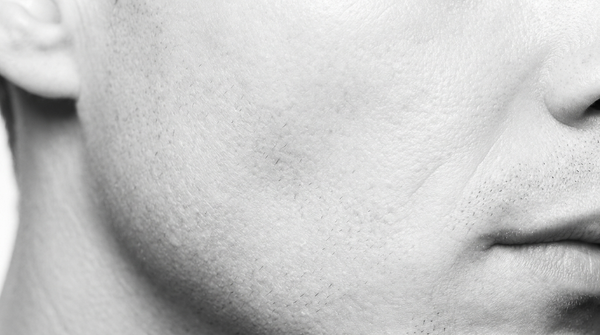
Pores appear dilated for two reasons: hypertrophic sebaceous glands (structural, not topically modifiable) and accumulation of keratin and sebum in the follicle that mechanically dilates the follicular ostium (modifiable). Niacinamide acts on the latter: by reducing the sebum produced, less material accumulates in the follicle, and the ostium visibly shrinks over 4-8 weeks.
Anti-inflammatory Effect
Niacinamide inhibits the production of pro-inflammatory cytokines (IL-8, TNF-α) in keratinocytes. This makes it effective not only against sebum but also against redness and shaving irritation—two problems often related in male skin.
Even Skin Tone
At concentrations above 4%, niacinamide inhibits the transfer of melanosomes from melanocytes to keratinocytes, reducing the appearance of spots and uneven skin tone over time.
Why "Higher Concentration = Better" Is Not True
The market offers niacinamide creams and serums at highly variable concentrations—from 2% to 20%. The implicit logic is that the higher the concentration, the stronger the effect. This logic is flawed.
Above 5%, niacinamide produces an intermediate metabolite—nicotinic acid—which causes cutaneous vasodilation with redness and burning (skin flush). In sensitive or reactive skin, high concentrations worsen tolerability without proportionally increasing efficacy.
Available meta-analyses in the literature indicate that the range of maximum clinical efficacy is 3-5%: sufficient for sebaceous inhibition and anti-inflammatory effect, below the threshold of conversion to irritating nicotinic acid.
PURIFY HBSKN - Hebi Skin: Niacinamide 3% in a Balanced Exfoliating System
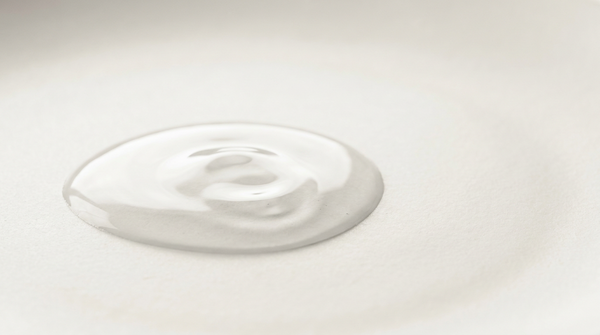
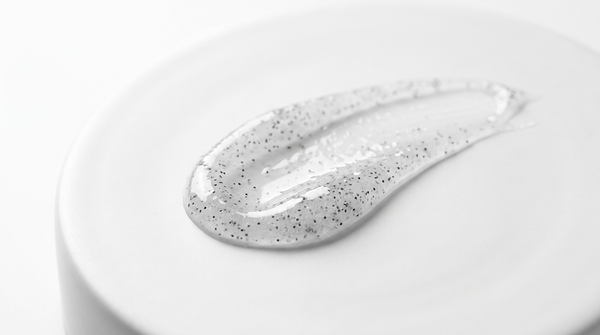
PURIFY by HBSKN - Hebi Skin is an exfoliating night serum—not a cream: its liquid texture ensures rapid penetration and optimal concentration of active ingredients without leaving residue. It combines three active ingredients in a synergistic system calibrated for male skin.
Niacinamide 3% + Glycolic Acid 7%
3% niacinamide manages sebaceous production and inflammation. 7% glycolic acid—the alpha-hydroxy acid with the lowest molecular weight, thus the highest penetration—performs chemical exfoliation: it dissolves the bonds between corneocytes, removes the thickened stratum corneum, and clears pores of keratin accumulation that causes their dilation.
The two active ingredients complement each other: glycolic acid frees the follicular ostium, and niacinamide reduces the sebum that re-clogs it. To learn more about glycolic acid's action on pores, consult our article PURIFY glycolic: documented pore reduction.
pH 4.5: The Threshold of AHA Efficacy
The pH of the formulation is crucial for the effectiveness of glycolic acid. AHAs are weak acids: their active form (undissociated acid) penetrates the lipid membrane only at a pH below 4.0-4.5. Above this threshold, the acid is dissociated and does not exert its exfoliating action.
PURIFY is formulated at pH 4.5—the optimal threshold that ensures the efficacy of AHAs while maintaining tolerability for male skin, including the perioral and submandibular areas where the skin is thinner due to shaving.
How to Incorporate PURIFY into Your Evening Routine
PURIFY is an exfoliating serum for evening use: glycolic acid increases skin photosensitivity in the hours following application, making night use the only correct and safe choice.
The optimal evening routine consists of three steps: cleansing with CLEANSE to remove accumulated PM10 and sebum, applying PURIFY as an active treatment, and finishing with HYDRATE to maintain skin barrier hydration overnight. These three products together form the HBSKN - Hebi Skin Purifying Routine, the complete system for those who want to control sebum and pores in a structured way.
Recommended frequency: 3-4 times a week initially (first 4 weeks), then every evening if tolerated. Gradual escalation avoids "purging"—the temporary worsening of acne that some users experience with chemical exfoliants in the first few weeks, due to accelerated cell turnover bringing pre-existing comedones to the surface.
For a more intense weekend application—when you have more time for skin care—consult our article on intensive weekend with PURIFY: how to maximize exfoliation safely on rest days.
Frequently Asked Questions
Yes, with solid clinical data. Studies on 2-5% topical formulations document a measurable reduction in sebum in the T-zone after 4 weeks of use. The mechanism is direct: inhibition of lipid transfer in the sebaceous glands, not simple surface removal like harsh cleansers do.
The clinically optimal range is 3-5%. Higher concentrations (10-20%) increase the risk of skin flush from conversion to nicotinic acid without increasing anti-sebum efficacy. 3% is the balance point between efficacy and tolerability.
Pure niacinamide is tolerated daily. PURIFY also contains 7% glycolic acid, which requires gradual escalation: start 3-4 times a week and increase frequency based on your skin's tolerability.
Niacinamide can be used both morning and evening. PURIFY specifically should be used in the evening because it contains glycolic acid, which increases skin photosensitivity: morning use would require mandatory high SPF to compensate, making evening the correct and safer choice.
Sebum reduction typically appears after 4 weeks of consistent use. Visible pore reduction takes 6-8 weeks, as it depends on the progressive exfoliation of comedones and follicular reorganization. Results are gradual but long-lasting, not immediate like with cosmetic mattifiers.
Conclusion
Niacinamide is one of the most versatile and well-documented active ingredients for male skin with excessive sebum production. It's not a cosmetic fad: the mechanisms of action are clear, clinical evidence is solid, and tolerability at correct concentrations (3-5%) is excellent.
PURIFY HBSKN - Hebi Skin combines 3% niacinamide, 7% glycolic acid, and pH 4.5 in an exfoliating night serum designed for male skin: sebum control, pore exfoliation, and inflammation reduction in a single product, with a formulation that respects the skin barrier.
Sources: Bissett DL et al., "Topical niacinamide reduces yellowing, wrinkling, red blotchiness, and hyperpigmented spots in aging facial skin" – International Journal of Cosmetic Science, 2004 | Draelos ZD et al., "The effect of 2% niacinamide on facial sebum production" – Journal of Cosmetic and Laser Therapy, 2006 | Hakozaki T et al., "The effect of niacinamide on reducing cutaneous pigmentation" – British Journal of Dermatology, 2002
👉 Shop PURIFY — combines 3% niacinamide and 7% glycolic acid: regulates sebum and refines pores without drying.
Products in the article